
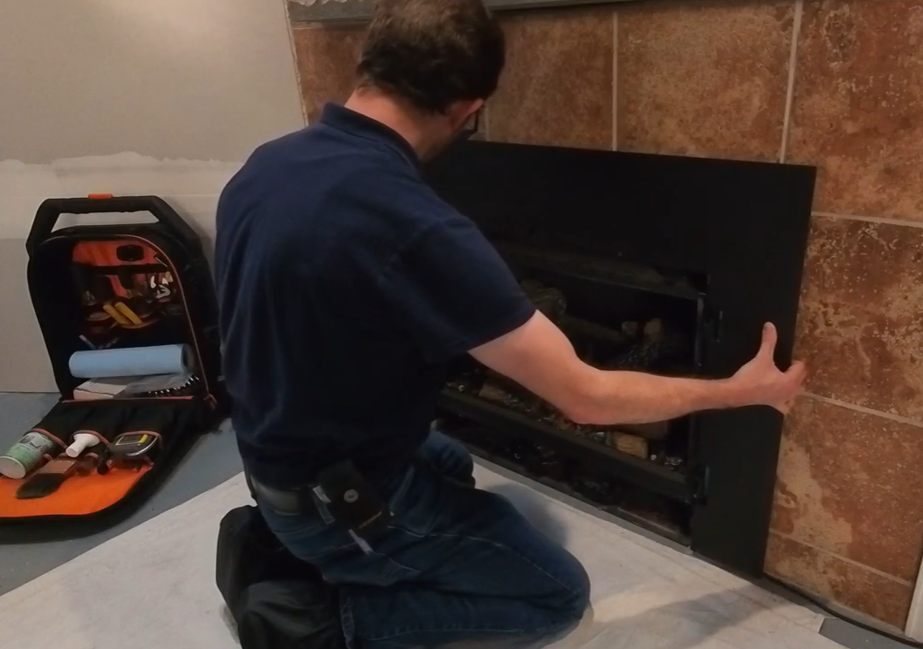
A homeowner’s interaction with a gas fireplace is typically very simple.
You push a button, flip a switch, or set a thermostat and let the fireplace do its thing. It looks good, your home gets warm and comfy, and everyone’s happy…as long as it keeps working properly.
It’s completely understandable that you wouldn’t be aware of everything going on “under the hood.” But just like a car needs fluid changes and new brakes from time to time, a gas fireplace needs attention, too.
After 20 years, I’ve heard all the reasons people don’t get their gas fireplaces serviced.
“I don’t use it that much.”
“It’s never had a problem before.”
“I didn’t think there was anything to service.”
If any of these sounds familiar to you, or if you’re just curious about what happens during a service call, then you’ll want to keep going. I’ll address each of these common mindsets and go over some things we look at during a service call.
Okay, but why get a gas fireplace serviced?
To start with, let’s talk about what a gas fireplace actually is from a material standpoint. At its most basic level, a gas fireplace is a type of machine. Because of the nature of the work this machine does – igniting and maintaining a fire in an indoor living space – gas fireplaces are highly engineered, undergo rigorous testing and certification, and are designed to work within very specific parameters. Like any other machine, there are moving parts as well as wear-and-tear items that need attention on a regular basis to keep everything safely within those designed parameters.
“I don’t use it that much.”
To be honest, this is a fair point. I’d even go so far as to say that a lack of use, within certain conditions, can reasonably extend the service interval of a gas fireplace without any significant consequences. But that’s “extend” the service interval, not “eliminate” service entirely. There are still things happening to the fireplace that you may not be aware of.
If your fireplace has a pilot flame that stays lit, then the gas valve is still operating, the pilot assembly is still exposed to heat, and the combustion chamber is still exposed to exhaust. The gas valve and pilot assembly are two major components that are still doing things, even if you rarely turn the main burner on. If you rarely drive a car but still turn the engine on and let it run for thousands of hours a year, you may not be replacing tires and brakes very often, but the car will still need maintenance.
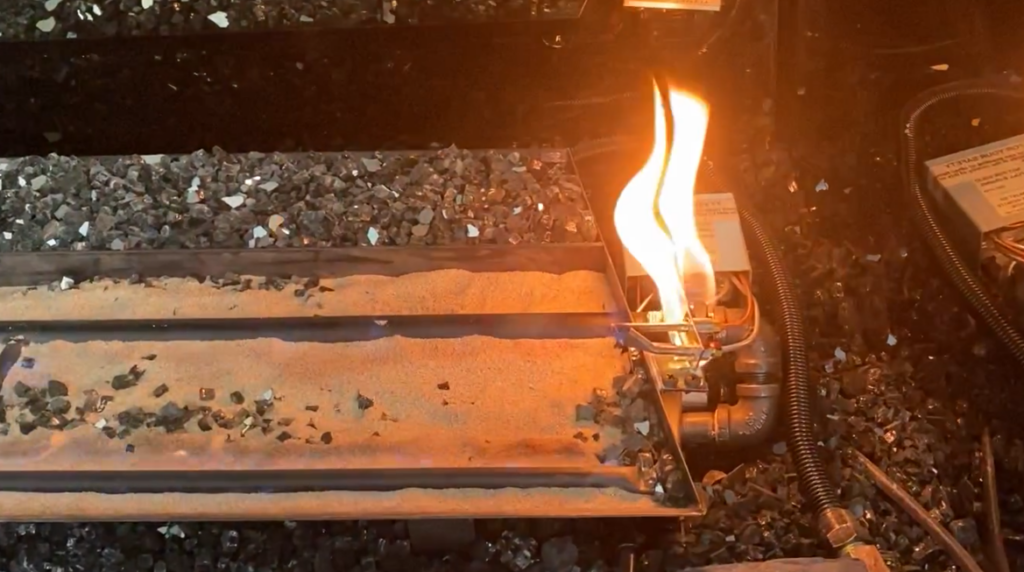
Even if you have an electronic ignition system and the fireplace doesn’t have a pilot flame that stays lit all the time, there are still things to be aware of. Fireplaces will still move air through them due to natural currents and atmospheric conditions. If you live in an area with even moderate humidity, your fireplace components (which contain a lot of metal) are being exposed to this moisture. Control boards, wires, and other components can still become damaged due to pests, moisture, and time.
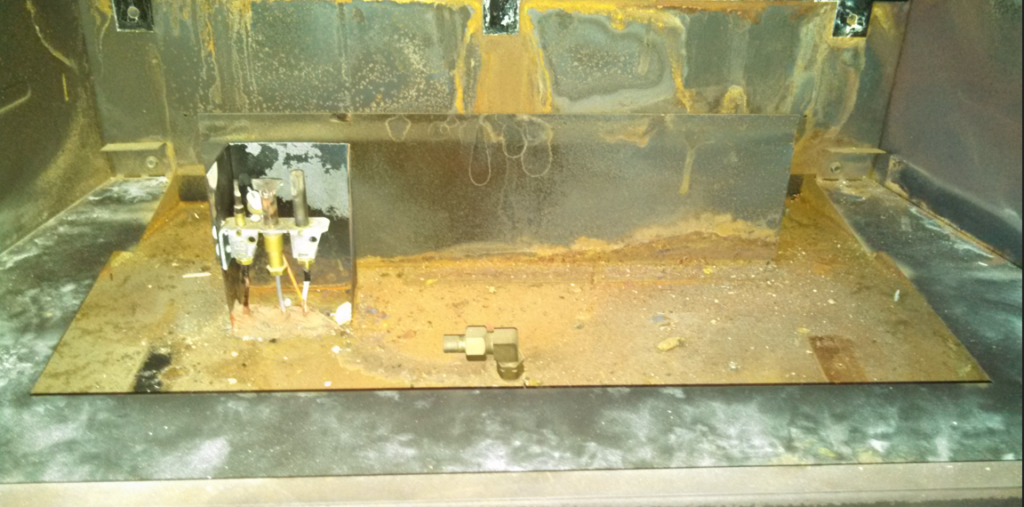
Again, you may not need a service every year in these cases, but that doesn’t mean neglecting your fireplace for decades is a good idea either.
“It’s never had a problem before.”
At face value, this sounds perfectly reasonable. Why service something if it’s still working? They key here is that “working” and “working properly” are two different things. Remember, gas fireplaces need to be operating within very specific parameters in order to be safe and avoid damage.
An accumulation of residue on your glass, a natural result of burning fuel gas, is perfectly fine if it’s cleaned off on a regular basis. If not cleaned off, it can eventually lead to the glass breaking. Issues with air mixtures, clogged burner ports, media degradation, or a number of other things can create a situation that causes your burner to crack or rupture. Catching a failing thermopile early means replacing it with no downtime. Not catching it could mean your fireplace won’t work when your power goes out, it’s 5 degrees with everything covered in ice, and no service trucks are running or there’s a 3-week backlog.
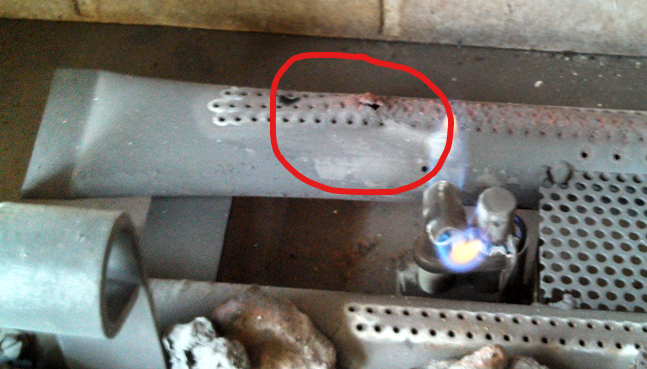
Fixing a problem after it’s happened is very often much more costly, in both time and money, than simply preventing the problem from occurring in the first place. Or at least catching it early enough that fixing it is done at your leisure and preplanned, not in a state of panic with no budget. Every machine needs to be fixed at some point. Wouldn’t you rather be prepared and choose when to fix it rather than waiting until it demands to be fixed at the worst possible time?
“I didn’t think there was anything to service.”
This is far more common than you might think. It’s also very understandable. There aren’t very many films or novels depicting a fireplace technician in jeans and a polo shirt pulling apart a Lopi insert and replacing a pilot assembly. Very few people mention, “I need to head home, I’ve got a fireplace technician coming today” in casual conversation the way they might mention taking their car to a mechanic. The plain truth is that gas fireplaces just aren’t thought about very often by most people the same way a lot of other types of machines are. They just sit there, working in the background, giving you a warm glow and keeping your house cozy while you sit and read or entertain guests with pie and eggnog.
Hopefully, by this point I don’t need to continue explaining all the things that could and do go bad with a gas fireplace. But just in case you’re still not convinced, here’s a short list of service items that we focus on during a service call:
- Gas control valve
- Air-fuel mixture
- Glass & gasket
- Burners and orifices
- Glowing ember material
- Logs, stones, and other media
- Venting system
- Control boards and modules
- Wall controls and remote controls
- Incoming and outgoing gas pressures
- Water infiltration
- Electrical connections and wire integrity
- Pilot assembly
- Etc.
So, now you can’t say, “I didn’t think there was anything to service.”