
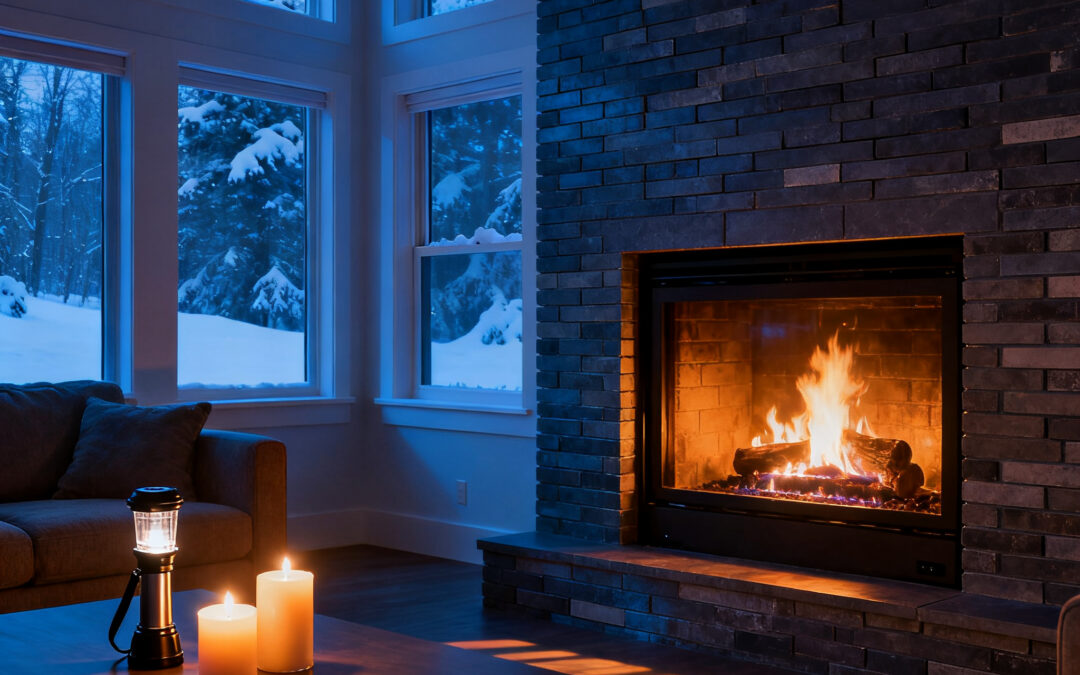
We rely on electricity for primary heat.
Whether they’re caused by storms, accidents, or other reasons, power outages are disruptive at best and potentially life-threatening at worst. Many of the modern comforts we enjoy are made possible by a reliable supply of electricity in our homes. But what happens if that supply is suddenly cut off during the winter in sub-freezing temperatures?
Almost all modern sources of primary heating require electricity, either as the main producer of heat itself, or to run the equipment that produces the heat from other fuels like gas or oil furnaces. For many people, losing power means losing the ability to heat their home. And in sub-freezing conditions, that can get very serious very quickly.
How can I use a gas fireplace during a power outage?
Of course, a wood stove is one option to provide emergency heat without electricity, but those require a fair bit of work: you have to have a wood pile, retrieve the wood, split the wood, load it into the stove, start and maintain the fire, and safely dispose of the ash afterwards without catching anything else on fire. A gas fireplace, on the other hand, is a far easier option for emergency heat. But how does that work? There are two main types of systems that make this possible.
The first type is called a “millivolt” system.
In a millivolt system, there’s a pilot light (small flame) that stays lit constantly. This small flame heats up something called a thermocouple and another thing called a thermopile. You don’t need to understand how these two things work, just that when they get hot, a small electrical charge is generated. This charge is enough to operate the gas control valve, keeping the pilot on and allowing your fireplace to turn on and off. No connection to your house power is required for a millivolt system. When you lose power, you won’t need to do anything at all, just use your fireplace as you normally do.
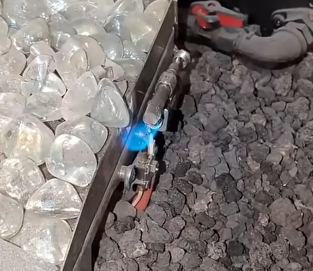
The second type is called an “electronic ignition” system.
These systems may also be referred to as “IPI” (intermittent pilot ignition), though that term is less accurate nowadays.
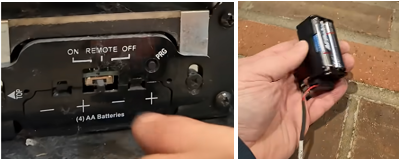
Electronic ignition systems are often connected to your main 120V house power, but a constant 120V supply is typically not required for the system to function. Most electronic ignition systems will also work with batteries as a backup source of power. Many of them will have a designated “backup battery” pack or compartment. When you lose power, simply install some common household batteries and the fireplace will work again. Most of these systems will last on a set of 4 AA batteries for at least couple of weeks. That’s more than enough to deal with almost any power outage, and you can continue replacing the batteries for as long as you need to.
All of that said, there are still a few things that won’t work during a power outage, whether you have a millivolt system or an electronic ignition system.
What won’t work during a power outage?
Convection blowers, accent lights, and power vent systems all require a constant 120V power supply to function. Additionally, most pellet stoves also require constant 120V power to operate their control systems, so these are typically unsuitable as an emergency heat source. DSI (direct spark ignition) gas fireplaces also require 120V power, though these are becoming extremely rare for residential use and you most likely don’t have one in your home.
The bottom line – if you’ve got a gas fireplace, you’ll have a source of heat during the next winter storm!
Using a gas fireplace during a power outage is easy and provides an excellent source of emergency or supplemental heat.
Check out our video on using your gas fireplace during a power outage for more information on how to use both millivolt and electronic ignition systems during a power outage.
Annual service on your gas fireplace is strongly recommended to make sure it’s working properly when you need it most!